
The world of rally racing has always been characterised by innovation and a relentless pursuit of performance. In this context, the concept of the Ferrari V8 swap of the Subaru STI rally car represents a striking departure from traditional engineering norms. This daring project, spearheaded by professional rally driver Sam Albert, aims to redefine expectations within the competitive racing landscape.
Thank you for reading this post, don't forget to subscribe!The inspiration for this unique endeavour can be traced back to Albert’s meticulous examination of rally regulations. Upon uncovering certain loopholes, he envisioned an audacious plan that not only challenged the status quo but also aimed to fuse two seemingly disparate automotive icons into one groundbreaking vehicle. The decision to integrate a Ferrari V8 engine with the Subaru STI platform was not merely an exercise in engineering; it was a bold statement about the boundaries of what a rally car can be.
As the project progressed, it quickly garnered attention within motorsport circles. Enthusiasts and professionals alike were captivated not only by the radical design but also by the distinct and exhilarating sound produced by the V8 engine. This unique auditory experience set the build apart from other rally cars, leading to discussions about its potential impact on future designs within the sport.
Moreover, the engineering excellence behind the Ferrari V8-swapped Subaru STI has raised questions about performance metrics and adaptability. The fusion of a high-performance Italian engine with a reliable Japanese chassis signifies the blending of different automotive philosophies, potentially paving the way for a new class of vehicles in rally racing.
The Loophole That Sparked ‘Mechanical Chaos’

The inspiration behind the V8 swap of the Subaru STI rally car lies within a critical analysis of the American Rally Association (ARA) regulations. The existing rules placed noticeable restrictions on the turbocharged engines typically used in rally vehicles, a standard that had been well established and followed by competitors. Under scrutiny, Albert identified a significant loophole that permitted the incorporation of a naturally aspirated engine, specifically a Ferrari V8 engine, into the competition framework.
Albert’s calculations indicated that while turbocharged engines delivered superior power outputs, their capacities were tightly regulated, creating a limit on how much power could be accessed during races. In contrast, the ARA regulations did not impose similar constraints on naturally aspirated engines. This discrepancy opened a window of opportunity to leverage the high-revving, powerful characteristics of the Ferrari engine, potentially offering a considerable strategic advantage over opponents constrained by turbo limitations.
As the project developed, the excitement and challenges of this unconventional swap became increasingly apparent. The decision to install a Ferrari V8 into the recognisable Subaru chassis represented a radical departure from conventional rally car design, stirring both enthusiasm and skepticism within the rally community. As engineers navigated the technical hurdles of fitting a V8 into a platform designed for a turbocharged four-cylinder, it was clear that this endeavour was not merely about speed; it was about redefining what was possible in rally racing.
Ultimately, this journey towards mechanical chaos is emblematic of innovation within motorsports. The benefits of the V8’s high torque and naturally aspirated reliability presented compelling arguments for its integration, challenging traditional perceptions and captivating the imaginations of racing enthusiasts around the globe.
Building the Beast: Technical Specifications and Modifications of the Subaru STI into a Ferrari V8 Swap

The transformation of a Subaru STI into a Ferrari V8-swapped marvel involves an intricate array of modifications and technical specifications. At the heart of this remarkable build is the Ferrari F136 IB V8 engine, a 4.3L unit known for its impressive performance metrics. This engine is capable of producing approximately 490 horsepower and 343 lb-ft of torque, providing a significant power boost over the original Subaru engine. Such enhanced performance enables the vehicle to accelerate and handle in ways that are atypical for a Subaru STI.
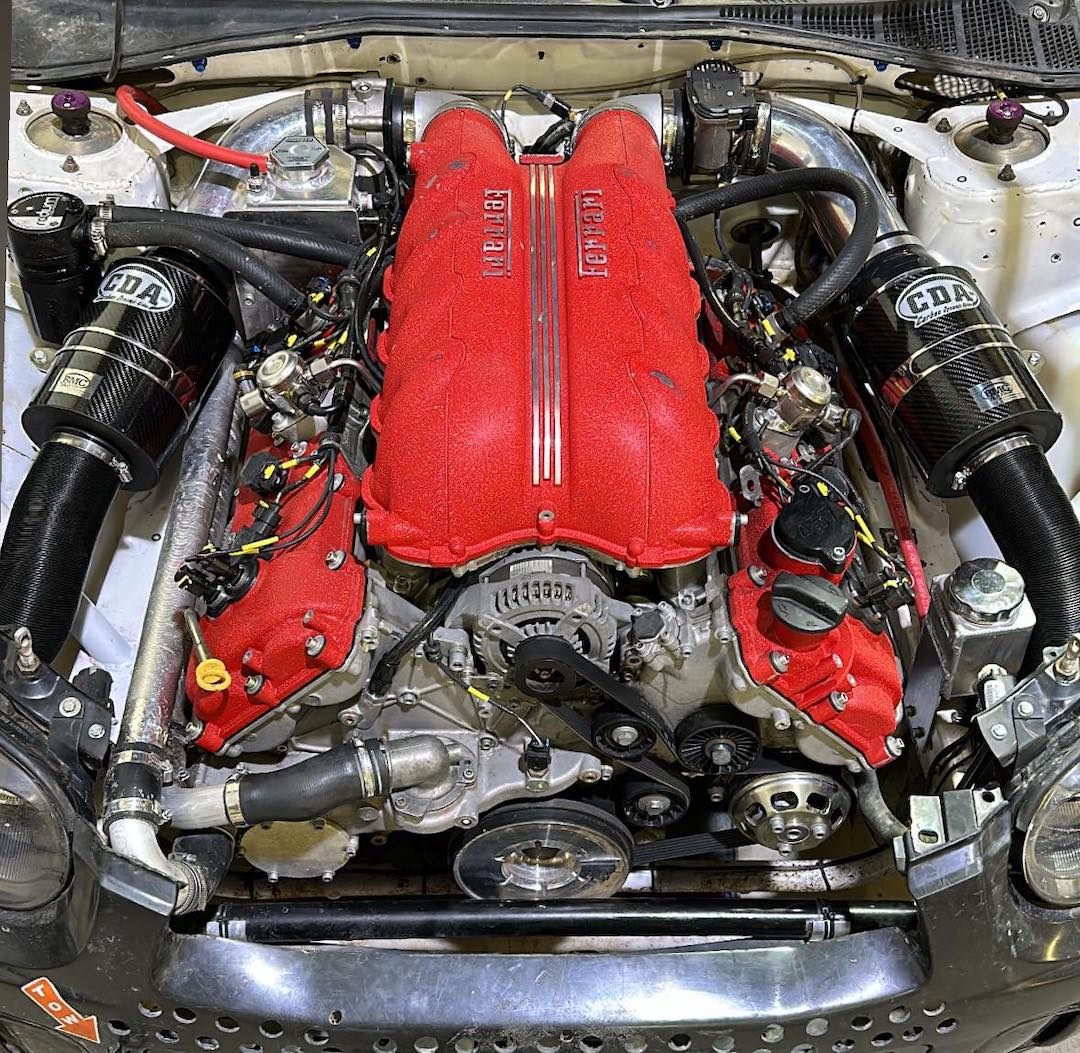
To accommodate the unique characteristics of the Ferrari engine, a bespoke adapter plate was developed, ensuring that the engine aligns perfectly with the Subaru’s transmission. This is crucial for maintaining drivability and reliability, as well as ensuring that the power is efficiently transferred to the wheels. The original Subaru transmission has been modified to handle the increased power, which includes upgraded gears and a reinforced casing to mitigate the stress introduced by the V8 engine.
In terms of the drivetrain, the V8-swapped Subaru STI retains the all-wheel-drive (AWD) system, a hallmark of the Subaru brand. However, alterations were made to optimize compatibility with the new engine, necessitating custom driveshafts and differential settings to ensure proper torque distribution. Another significant modification includes the relocation of the radiator to accommodate the V8 engine’s cooling needs, which is essential for maintaining optimal operating temperatures during high-performance driving conditions.

Subaru Impreza GRB WRX STI 08-14 – Turbo Back Exhaust System

Subaru Impreza GC8 96-00 GD 93-05 WRX STI – Spec 3 Exhaust Manifold

Subaru Impreza GC8 WRX STI 95-01 – Black Aluminium Radiator

Subaru Impreza GC8 WRX STI 95-01 – Aluminium Radiator

Subaru Impreza GDA WRX STI 01-03 – Aluminium Radiator

Subaru Impreza GDA WRX STI 02-07 – Front Mount Intercooler & Intake Kit

Subaru Impreza GRB WRX STI 08-14 – Aluminium Radiator

Subaru Impreza GC8 WRX STI 95-01 – Front Strut Brace

Subaru Impreza GC8 WRX STI 95-01 – Rear Strut Brace

Subaru Impreza GC8 WRX STI 95-01 – Exhaust Centre Section
Additionally, custom exhaust headers were fabricated to fit the V8 engine, enhancing exhaust flow and granting a distinct auditory experience that is synonymous with the Ferrari heritage. With these extensive modifications and technical specifications, the Subaru STI has been successfully transformed into a powerhouse, showcasing the potential of combining two distinct automotive legacies.
Performance and the Art of Rally Driving

The transformation of the Subaru STI into a Ferrari V8-swapped rally car marks a new chapter in performance art, blending two distinct automotive philosophies into a single, formidable entity. The handling characteristics of this unique amalgamation immediately set it apart from traditional rally vehicles. With the lightweight chassis of the Subaru complemented by the robust power of the Ferrari V8 engine, the car exhibits an agility that is both thrilling and precise, allowing drivers to navigate complex rally stages with confidence.
Acceleration is another standout feature of this performance powerhouse. The Ferrari V8 delivers power with an exhilarating immediacy, offering drivers a surge that feels both responsive and predictable. This unique power delivery is essential for rally driving, where a quick burst of power can be the difference between overcoming an obstacle and losing precious seconds. According to Sam Albert, a driver with extensive experience in both Subaru and Ferrari platforms, the V8’s torque curve allows for exceptional control during high-speed cornering and quick directional changes.
The community’s response to the car’s performance has been nothing short of revolutionary. Enthusiasts and casual observers alike have flocked to rallies, eager to witness the fusion of Italian engineering and Japanese rally tradition. The Ferrari engine’s unmistakable roar reverberates through the forests, creating a sensory experience that captivates all who are present. This viral popularity speaks volumes about the allure of innovative engineering and how it can elevate the rally racing experience to new heights.
Subaru Impreza GRB WRX STI 08-14 - Turbo Back Exhaust System
Running from the turbo back it includes a decat downpipe (replacing the restrictive catalytic converter), a decat centre section and culminates with a quad tailpipe back box.
Features:
Manufactured from T304 stainless steel
TIG welded, CNC machined flanges
Gaskets and bolts included
Please note: sold for off-road/track use only - will not pass an MOT emissions test.
Subaru Impreza GC8 96-00 GD 93-05 WRX STI - Spec 3 Exhaust Manifold
Features:
Constructed from T304 stainless steel
Unequal length header pipes
3 bolt Up-Pipe flange
Improved throttle response and gas flow
Gaskets included
Please note: due to 3 bolt Up-Pipe flange this manifold can't be used with the standard Up-Pipe and must be used in conjunction with the supplied Up-Pipe.
Subaru Impreza GC8 WRX STI 95-01 - Black Aluminium Radiator
A must-have item for spirited driving, this twin core radiator will keep your coolant temperature down no matter how hard you are pushing thanks to an up to 30% increase in cooling capability over the standard unit.
It is scientifically proven that black radiators have a higher heat emissivity rate than non-black radiators, allowing heat to transfer away from the radiator more easily.
Features:
Large high-flow aluminium core
Up to 30% greater cooling capability over OEM
Manufactured from aerospace grade aluminium
Direct replacement for OEM the item
Subaru Impreza GC8 WRX STI 95-01 - Aluminium Radiator
A must-have item for spirited driving, this twin core radiator will keep your coolant temperature down no matter how hard you are pushing thanks to an up to 30% increase in cooling capability over the standard unit.
Features:
Large high-flow aluminium core
Up to 30% greater cooling capability over OEM
Manufactured from aerospace grade aluminium
Direct replacement for the OEM item
Subaru Impreza GDA WRX STI 01-03 - Aluminium Radiator
A must-have item for spirited driving, this twin core radiator will keep your coolant temperature down no matter how hard you are pushing thanks to an up to 30% increase in cooling capability over the standard unit.
Features:
Large high-flow aluminium core
Up to 30% greater cooling capability over OEM
Manufactured from aerospace grade aluminium
Direct replacement for the OEM item
Subaru Impreza GDA WRX STI 02-07 - Front Mount Intercooler & Intake Kit
Features:
Bar & plate style intercooler (25x9x3.5")
3" inlet and outlet
TIG welded
Polished aluminium pipework
All necessary clamps and hoses included
1050cfm @ 0.5psi drop
Subaru Impreza GRB WRX STI 08-14 - Aluminium Radiator
A must-have item for spirited driving, this twin core radiator will keep your coolant temperature down no matter how hard you are pushing thanks to an up to 30% increase in cooling capability over the standard unit.
Features:
Large high-flow aluminium core
Up to 30% greater cooling capability over OEM
Manufactured from aerospace grade aluminium
Direct replacement for the OEM item
Subaru Impreza GC8 WRX STI 95-01 - Front Strut Brace
Reduces chassis flex, improving steering response and stability
Lightweight
Easy bolt-on installation
Subaru Impreza GC8 WRX STI 95-01 - Rear Strut Brace
Reduces chassis flex, improving steering response and stability
Lightweight
Easy bolt-on installation
Subaru Impreza GC8 WRX STI 95-01 - Exhaust Centre Section
Features:
Manufactured from T304 stainless steel
2.5" bore
TIG welded, CNC machined flanges
Compatible with standard or aftermarket back box
Please note: 1350mm length. Please check length of your current centre section before ordering.


0 Comments