The VTEC Era Is Dead: Why Your Reliable Honda Civic Now Needs A Computer Reboot Instead
Honda’s foothold in Asian imported car market is shrinking fast.
Despite leaning on its flagship models, the Japanese automaker has struggled to regain momentum. Analysts now view its electrification push as the most realistic path to a turnaround.
Flagship models fail to lift sales
Industry data released on January 5 shows Honda Korea sold 1,726 vehicles from January through November last year. Sales likely remained below 2,000 units for the full year, market watchers say.
That would be well below the prior year’s 2,507 units, marking Honda Korea’s second-worst annual performance on record. The only weaker year was 2023, when sales fell to 1,385 units amid a lingering boycott of Japanese products and a thin new-model pipeline.
Honda attempted to revive demand through core models such as the Accord and CR-V, but the effort delivered limited results. With competition intensifying in the hybrid segment and brand visibility weakening, Honda has slipped in consumer consideration.
Even Honda’s motorcycle business, traditionally a reliable pillar, is facing mounting pressure.
Delivery-focused scooters such as the PCX and ADV once delivered steady volumes and helped support the company’s overall performance. Recently, however, scooter demand has softened alongside a slowdown in the food delivery platform market.
Industry experts say Honda’s lineup needs a reset, with new electrified models at the center. A product mix still anchored in internal combustion engines and hybrids is increasingly seen as insufficient in a rapidly changing market.
Electrified models emerge as a make-or-break bet
This year, Honda plans to introduce the Acura RSX, the first model built on its dedicated EV platform. Reviving a nameplate once associated with a sporty coupe, the new RSX returns as a fully electric SUV.
The model is expected to be the first mass-produced vehicle to showcase Honda’s next-generation EV technology under the “Honda 0 Series,” serving as a reference point for the brand’s broader electrification roadmap.
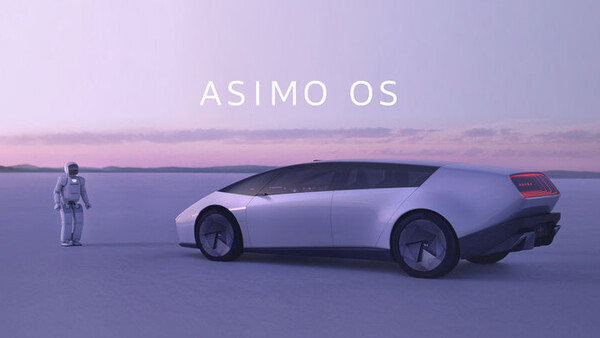
It will also debut Honda’s proprietary vehicle operating system, “ASIMO OS,” named after the company’s well-known humanoid robot. The platform is positioned as a core element of Honda’s software-defined vehicle strategy.
ASIMO OS is designed to integrate autonomous driving, advanced driver assistance, and infotainment within a single operating system, with capabilities that can expand through over-the-air updates.
Honda is also stepping up investment in electrification infrastructure. The company recently acquired a building and related assets tied to a battery joint venture facility with LG Energy Solution in Ohio.
The site is expected to serve as a key production hub for batteries used in future Honda and Acura EVs.
“For Honda to regain ground in Asia, it will need more than competitive electric vehicles,” one industry analyst said. “It must also rebuild brand strength and clarify its technology direction. New electrified models could be the starting point, and 2026 may become a pivotal year for the company’s rebound.”


0 comentários